

Stop Chasing Filmmaking and Photography Gigs. Build a Creative Career That Lasts
Episode 39 of the SHOTLIST Podcast with Darren Rayner


Most filmmakers and photographers get stuck in the feast or famine cycle. Darren Rayner built a business that runs on clarity and systems, not constant hustle. Here’s how he made the shift.
From Action Sports Roots to Scaling a Creative Studio
After breaking his back snowboarding at 19, Darren’s passion for the mountains never left. But the accident forced a shift. Picking up a video camera for the first time during rehab unexpectedly unlocked a new creative path. What started as filming friends in the backcountry evolved into Voleurz, a grassroots media and apparel brand that predated YouTube. Eventually, that experience led Darren to launch Magnafire Media, a full-service creative studio working with global outdoor brands.
In this conversation, Darren and I go deep into the exact systems and mindsets that allowed him to turn a decade of passion projects into a thriving commercial business. Below are some of the key frameworks that stood out.
The Power of “Ikigai” for Creatives
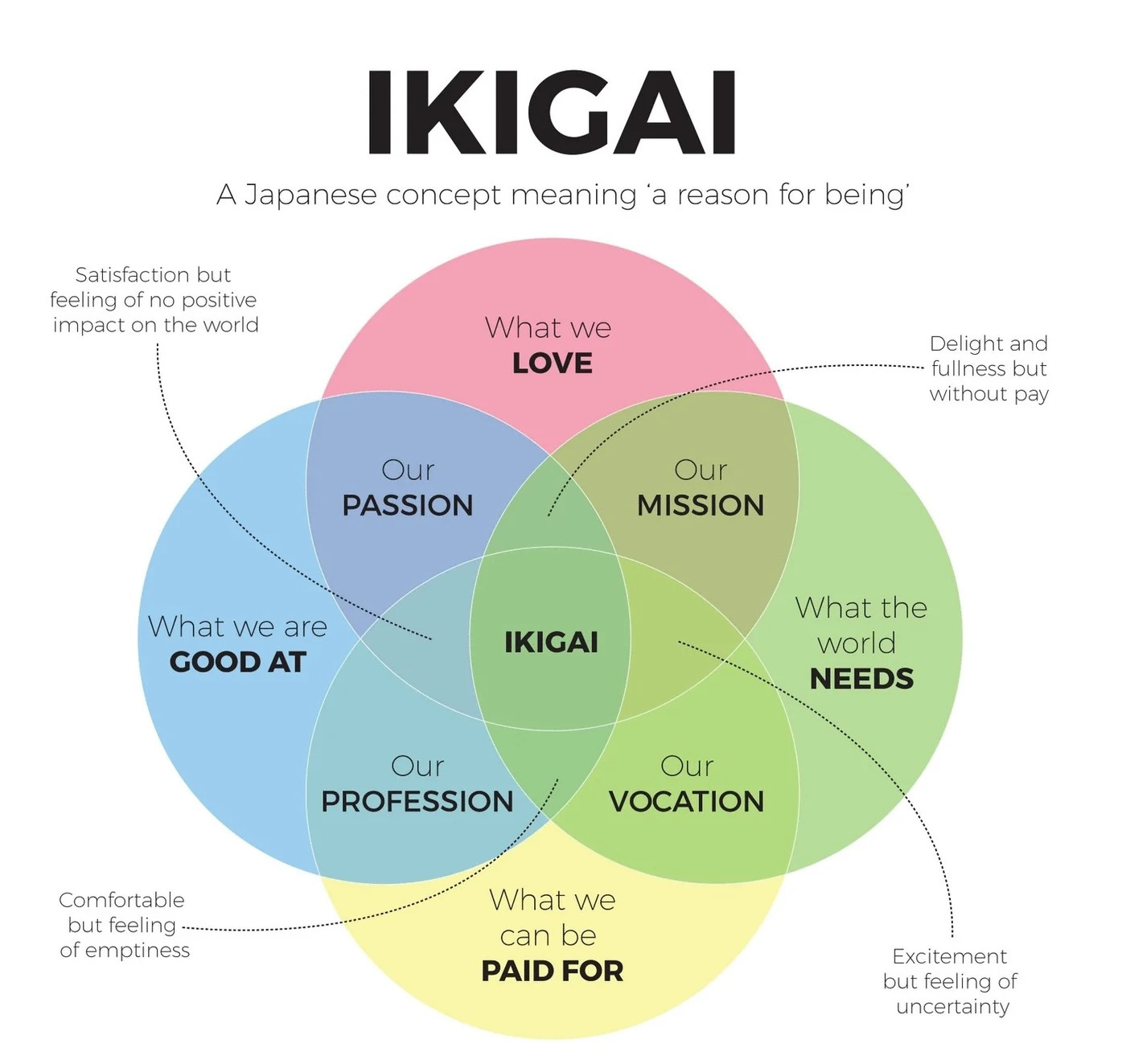
Most creatives default to one of two extremes: either they do the work they love but struggle to make money, or they chase client work that pays but drains their passion.
Darren uses the Japanese concept of Ikigai as his compass. He frames it as the intersection between:
What you love
What you’re good at
What the world needs
What people will pay for
The sweet spot lies in continually realigning to projects that overlap in all four areas. When things start to feel misaligned, Darren consciously adjusts back toward center, either by pursuing passion projects or by focusing on clients that better fit his values.
Darren talks about IKIGAI ⬇️
The Discovery Session Process
One of the most practical tools Darren shared is how he now leads clients through a structured discovery session before any filming happens. This helps eliminate scope creep and builds long-term trust.
The framework:
Goals – What are you trying to achieve?
Buyer Persona – Who is the audience?
Success Criteria – What would success actually look like?
Key Messaging – What must be communicated?
Deliverables – What specific content needs to be produced?
By slowing down upfront, Darren helps clients clarify their own needs, which often leads to longer-term retainers and stronger partnerships.

Save 20% on Camera, Lighting, and Grip Rentals at Lorne Lapham
SHOTLIST has partnered with Lorne Lapham Sales & Rentals to offer our community an exclusive 20% discount on pro gear rentals. Whether you're prepping for a commercial shoot or a passion project, this makes it easier to do it right.
Join the SHOTLIST x Lapham mailing list to unlock your discount and get first access to gear promos, tips, and insider offers. Located in Vancouver, BC, Canada
The Content Pyramid
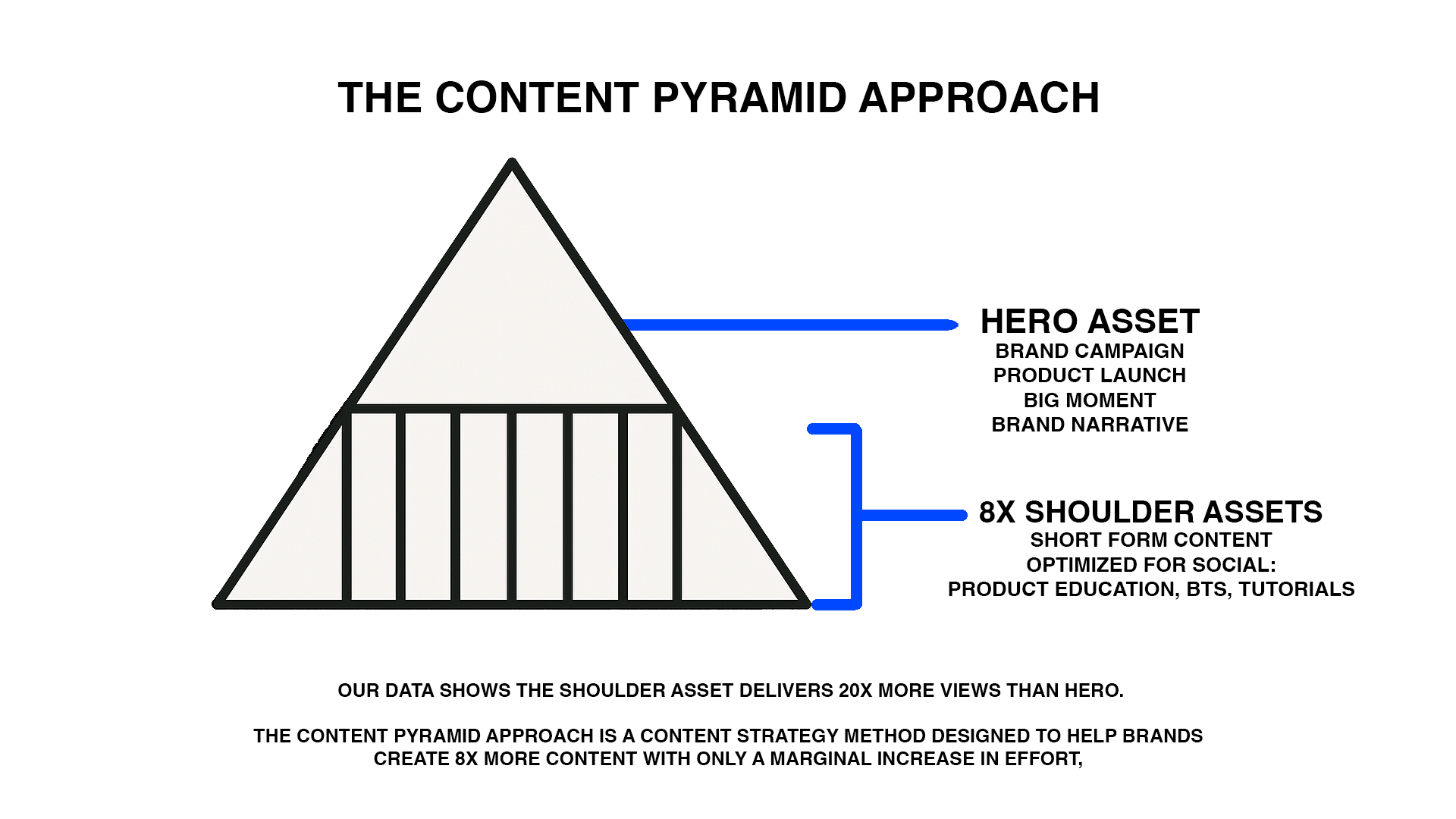
Many brands dump all their resources into one “hero video” and leave massive opportunity on the table. Darren’s Content Pyramid approach flips that:
Shoot the primary hero asset.
Simultaneously capture 8+ shoulder assets: BTS footage, short educational clips, athlete interviews, gear tips, and platform-specific cutdowns.
The kicker? Darren’s data shows these shoulder assets often outperform the hero content by a factor of 20 to 1 on social media.
This simple shift dramatically increases ROI for clients while requiring only marginal additional effort during production.
Lead Generation Without “Selling”
Like most creatives, Darren admits he hates traditional sales. Instead, he’s built a lead pipeline using two low-pressure strategies:
Curious student approach: Reaching out to people he genuinely wants to learn from.
No-agenda intros: 15-minute coffee chats with people in or adjacent to his industry.
This non-salesy approach has allowed him to steadily expand his network, often leading to work down the road. He estimates that only 5 to 10 percent of these conversations turn into actual clients, but it’s a consistent enough pipeline to drive growth.
LinkedIn as an Untapped Platform
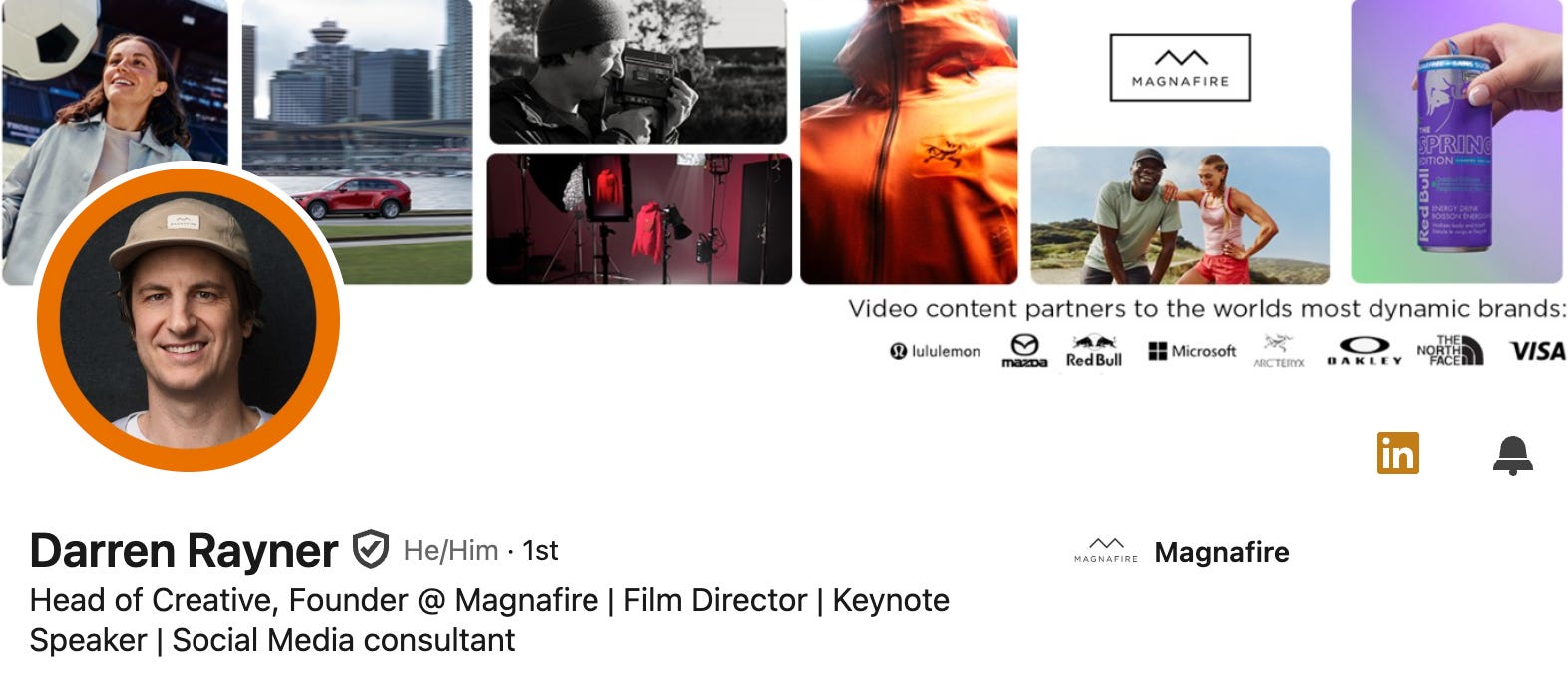
Surprisingly, Darren credits much of Magnifier’s recent growth to his consistent activity on LinkedIn. While Instagram remains relevant for showcasing creative work, LinkedIn allows him to get in front of the brand marketers and decision makers actually hiring production companies.
His simple content strategy revolves around three pillars:
Community spotlights – Shouting out great work from other brands.
Project breakdowns – Sharing behind-the-scenes stories of how their own projects came together.
Educational insights – Explaining creative concepts like the content pyramid or their client discovery process.
Darren’s take is clear: creatives underestimate how fascinating our own world is to people outside it. Telling those stories builds trust and authority with clients.
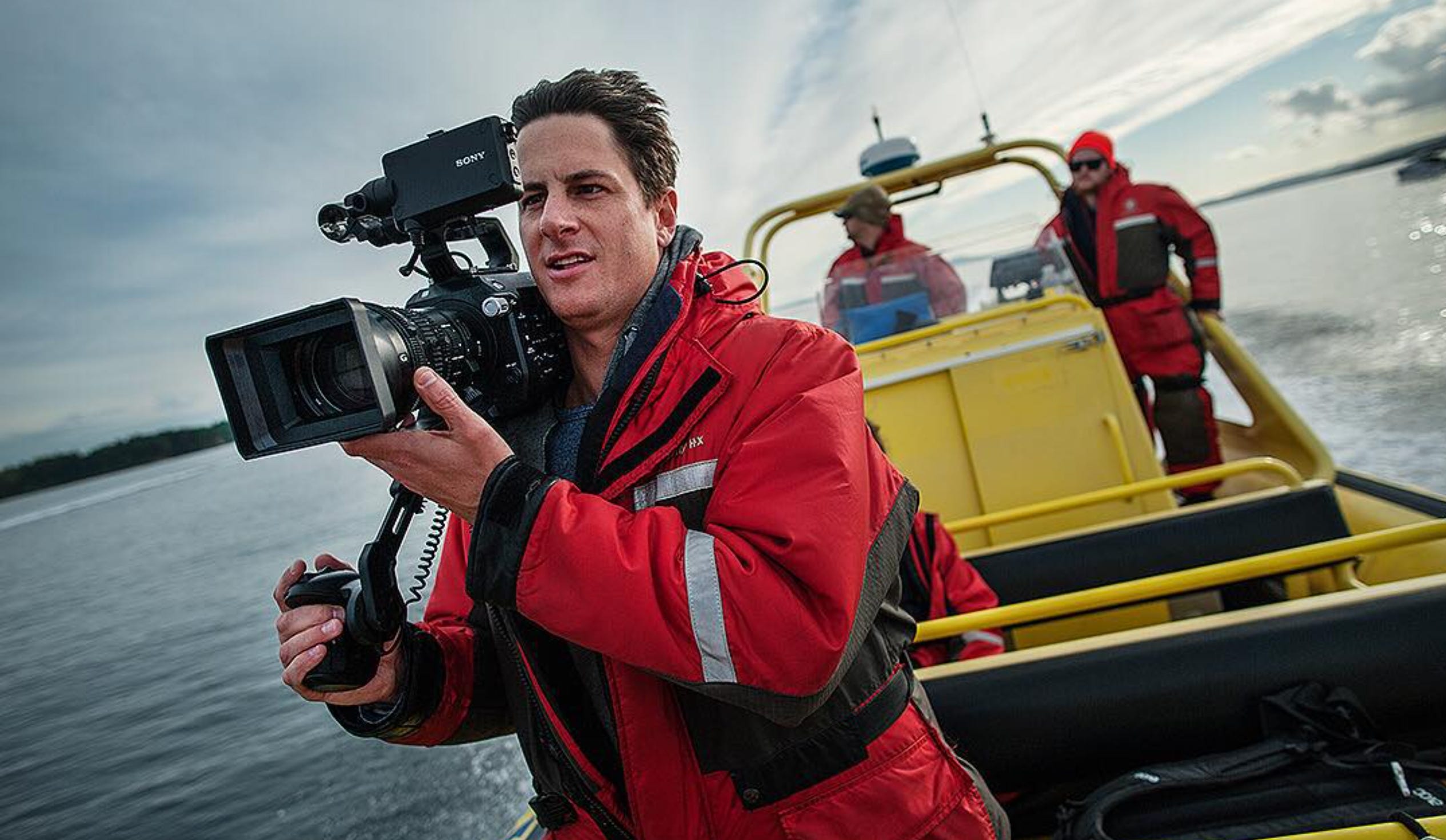
Scaling a Team (Without Breaking the Business)
Darren also shared a very honest look at how Magnifier has grown from a one-man-band into a full creative team. His approach:
Use freelancers at first to validate workload.
Only hire full-time once consistent demand is proven for 6+ months.
Build team roles by first writing down all the tasks that need delegation.
Give clear ownership lanes so team members can thrive independently.
His advice: expect growing pains. Building a business means constant shifts between creative, sales, leadership, and operational hats. It’s messy, but worth it.
Final Takeaway
If there’s one overarching theme from Darren’s journey, it’s this:
Stop trying to separate creativity and business. The two can feed each other if you build intentional systems that support both.


It takes a special kind of person to bring a room full of creatives together and make it feel this good. Thank you Jen Girardi from ALTO for making it all happen.
Don't let this be a one-sided conversation. Hearing your thoughts is what keeps this going. Drop a comment and let me know what landed. I would love to hear from you.